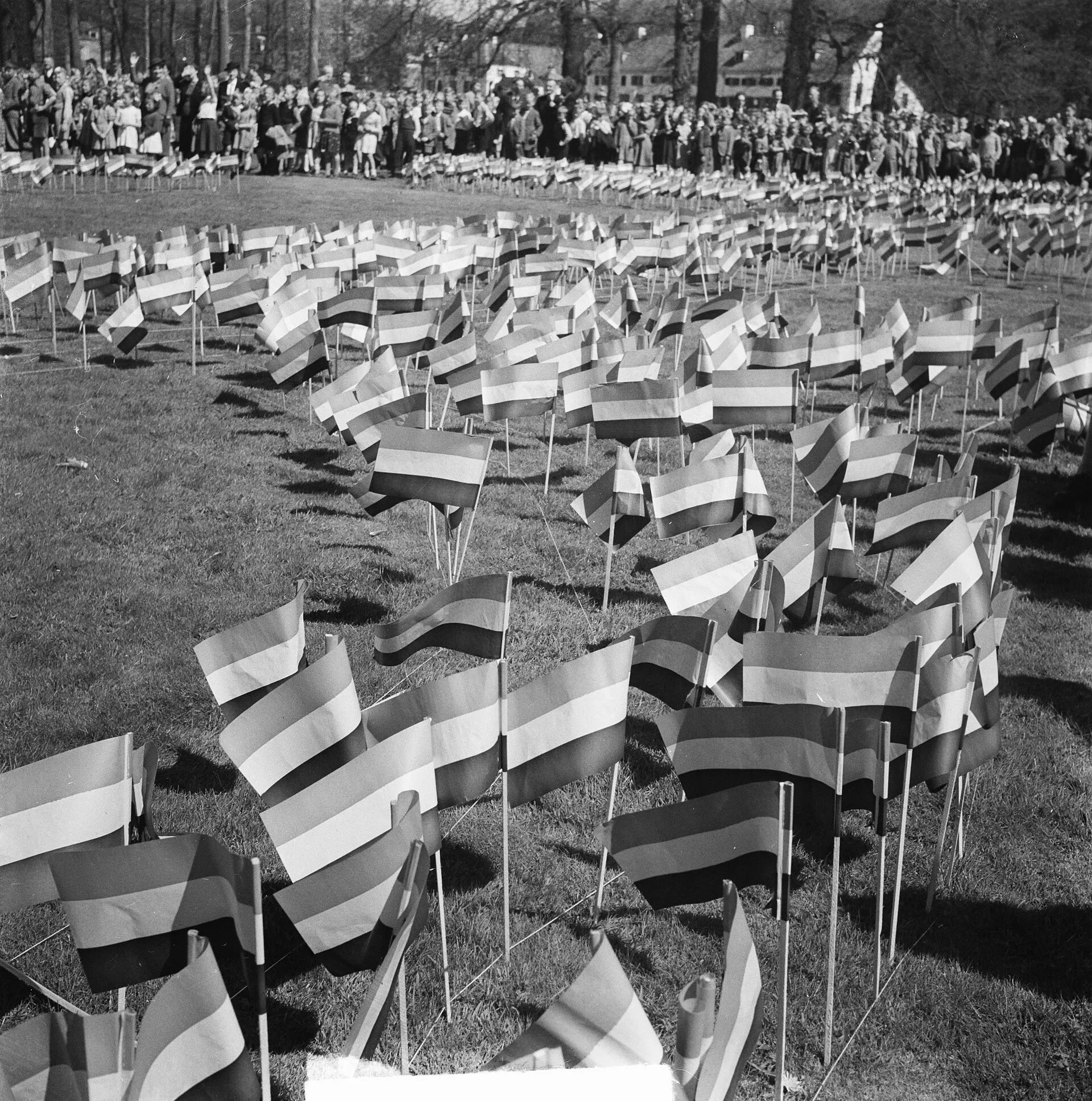

Why orange?
The royal family belongs to the House of Orange-Nassau. The name Orange comes from the principality of Orange in the south of France. William of Orange inherited it in 1544. He later led the revolt against the Spanish king and is seen as the Father of the Nation.
So the colour orange comes from a place name, not from the fruit. Even so, orange became the colour of the royal house and later of the whole country. On King’s Day the Netherlands turns orange: clothes, hats, little crowns, garlands and painted faces. Orange is also the colour of the Dutch national football team.
The flag with the orange pennant
On King’s Day many houses fly the Dutch flag: red, white and blue. Above it there is often an orange pennant, a long narrow flag. The pennant is for days connected to the royal house. According to the national government’s flag instructions, it is flown on King’s Day and on the birthdays of Queen Máxima, Princess Beatrix and the Princess of Orange. On other flag days, such as Liberation Day, the flag is flown without the pennant.
The flag instructions only apply to national government buildings. For everyone at home they are a guideline: you are free to decide when to put out your flag.
The orange tompouce
A tompouce is a pastry of puff pastry filled with custard cream and topped with a layer of pink icing. Around King’s Day the icing turns orange. The HEMA department store has sold the tompouce since 1932 and made the orange version an icon. Nowadays bakers and supermarkets also sell huge numbers of them in those weeks. How to eat one without the cream squirting out is an eternal debate.
Oranjebitter
Oranjebitter is a spirit that tastes of bitter orange peel. It has been made for centuries and has traditionally been served at royal celebrations. On King’s Day, people in some villages still raise a glass of it to the King, for example after the aubade. If you do not drink alcohol, orange lemonade or orange juice is just as festive.
The Wilhelmus
The Dutch national anthem is about William of Orange. The lyrics were written at the time of the revolt against Spain, between 1568 and 1572. Nobody knows for certain who wrote them. The song has fifteen verses; together, their first letters spell the name WILLEM VAN NASSOV. Usually only the first verse is sung, sometimes the sixth as well.
The Wilhelmus only became the official national anthem on 10 May 1932, by a decision of the cabinet. It is often called the oldest national anthem in the world. That is not quite true, because the lyrics of the Japanese anthem are older. But it is certainly one of the oldest. On King’s Day it is sung at the aubade and during the royal family’s visit.
The aubade
In many towns and villages King’s Day begins with an aubade, a morning serenade. Schoolchildren, a brass band and residents gather at the town hall in the morning. They sing the Wilhelmus and other songs, and the mayor gives a short speech. Then the flags go up and the party begins. The aubade is often organised by the Oranjevereniging.
Orange Associations
As early as the first Princess’s Day in 1885, there were local committees organising celebrations. In many places these grew into Oranjeverenigingen (Orange Associations). They still exist and are run by volunteers. They organise the aubade, children’s games, parades and sometimes also the 4 and 5 May commemorations. In Lelystad this is done by the Oranje Comité Lelystad.
Children’s games
King’s Day has always been a children’s party, and the old games are still around. Well-known games are:
- Koekhappen: with your hands behind your back, biting a slice of spiced cake hanging from a string.
- Zaklopen: a sack race, jumping with your legs in a jute sack.
- Spijkerpoepen: with a nail on a string tied around your waist, lowering the nail into a bottle without using your hands.
- Sjoelen (Dutch shuffleboard) and blikgooien (knocking over tins): games that grandpa and grandma join in too.
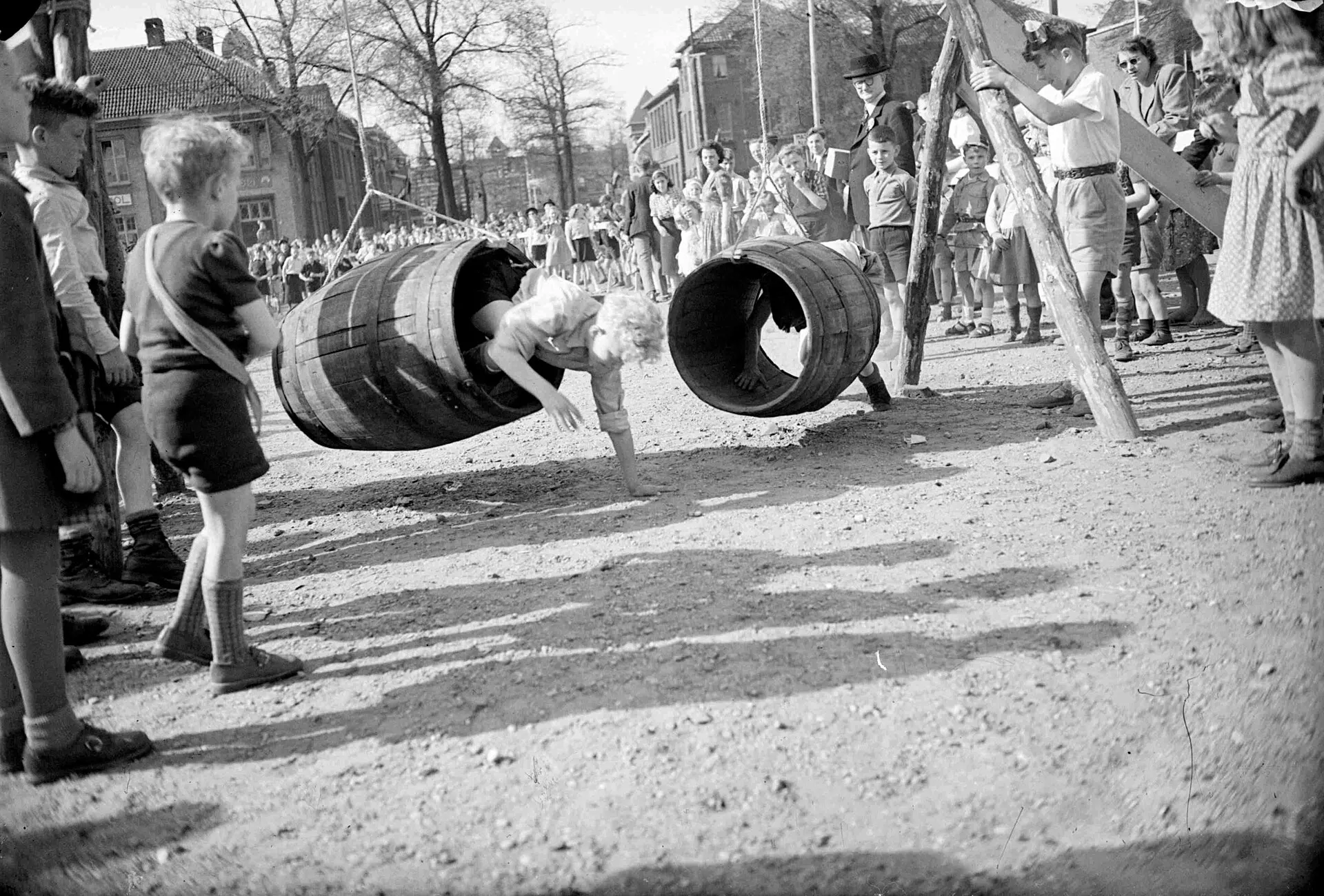

Tips for a day out with children are on King’s Day with kids.
The flea market
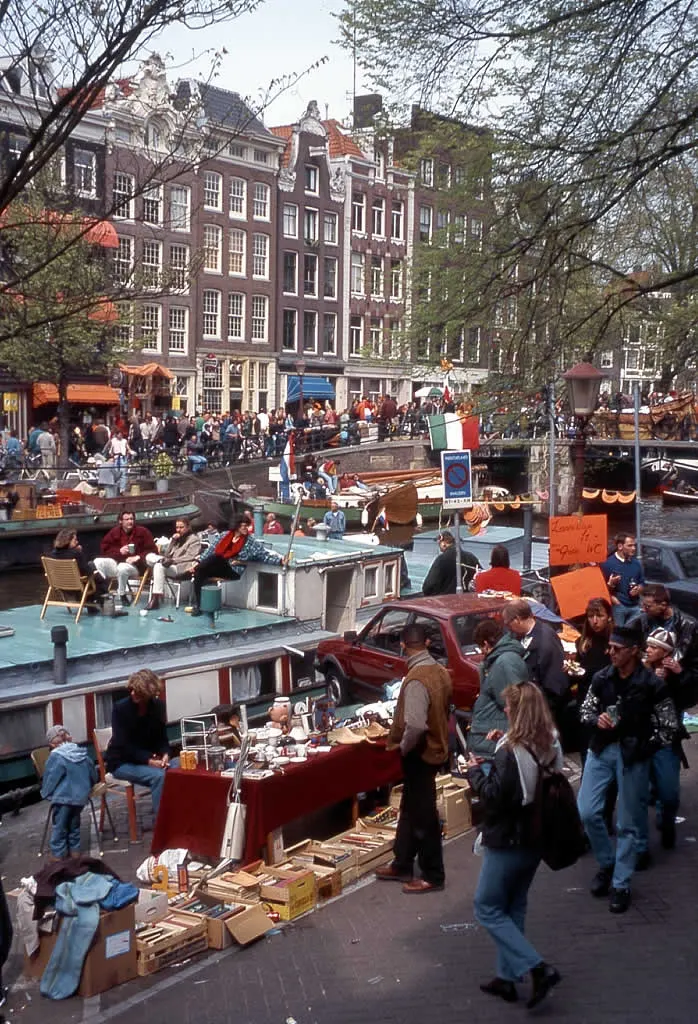
On King’s Day, in most municipalities anyone may sell on the street without a permit. This is the vrijmarkt, the flea market. Children sell old toys, adults clear out their attics. In big cities the market lasts all day and whole streets fill up. In Utrecht the flea market in the city centre already starts on King’s Night, at 18:00. In Amsterdam’s Vondelpark only children aged 16 and under may sell.
The rules differ per municipality. How it works in Lelystad is on King’s Night and flea market.

King’s Night
The evening before King’s Day is called King’s Night (Koningsnacht). In many cities there are concerts and parties in bars and restaurants. King’s Night is especially big in The Hague and Utrecht. It used to be Queen’s Night.
Lintjesregen and Koningsspelen
There are two more traditions around King’s Day:
- The lintjesregen (“shower of ribbons”), on the last working day before King’s Day. Mayors all over the country present royal honours to people who have done a great deal for others. In 2027 this is Monday 26 April.
- The Koningsspelen (King’s Games), a sports day for primary schools, usually on the last Friday before King’s Day. The first Koningsspelen were held on 26 April 2013, the year Willem-Alexander became king.
The royal family’s visit
Until 1980 the country came to the queen: at the parade (defilé) at Soestdijk Palace, thousands of people filed past the palace steps. Queen Beatrix turned it around: every year she visited one or two municipalities with her family. King Willem-Alexander continued this. An overview of all visits since 2014 is on All host cities. Read the full history on From Princess’s Day to King’s Day.